


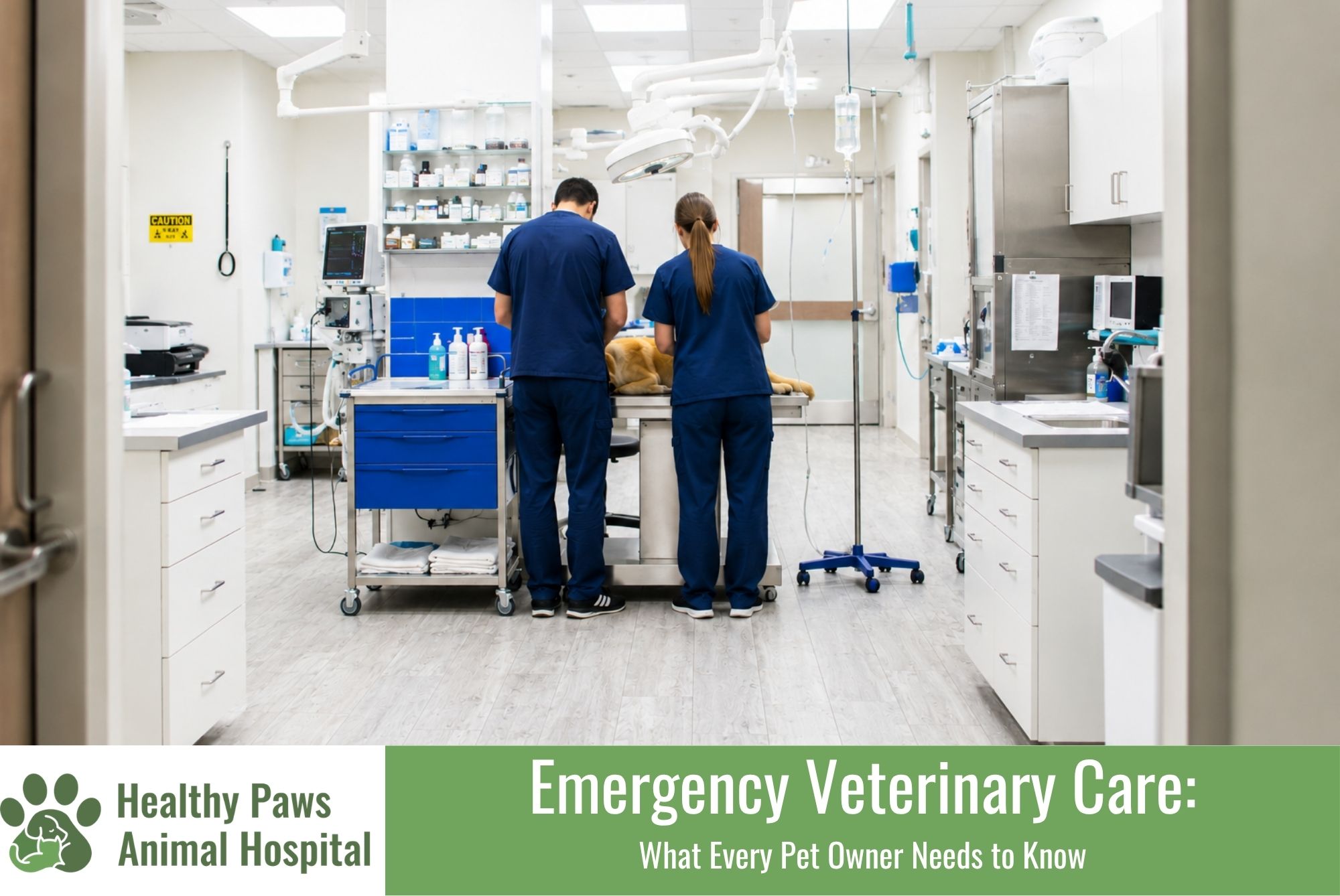
As pet owners, we do everything possible to keep our furry family members safe and healthy. However, emergencies can happen unexpectedly, and knowing how to respond can make a significant difference in your pet’s outcome. Whether it’s an accidental injury, sudden illness, poisoning, or difficulty breathing, immediate veterinary attention is often critical.
At Healthy Paws Animal Hospital in Glendora, CA, our compassionate veterinary team understands how stressful pet emergencies can be. We are committed to providing prompt, professional care when your pet needs it most. Our hospital offers comprehensive veterinary services, including emergency care, diagnostic imaging, surgery, internal medicine, wellness care, and more to help pets receive the treatment they deserve.
What Is Considered a Pet Emergency?
Many pet owners struggle to determine whether a situation requires immediate veterinary attention. While some conditions can wait for a scheduled appointment, others require urgent care.
Common Pet Emergencies Include:
- Difficulty breathing
- Severe bleeding
- Trauma from car accidents
- Broken bones
- Seizures
- Loss of consciousness
- Poison ingestion
- Heatstroke
- Persistent vomiting or diarrhea
- Difficulty urinating
- Choking
- Eye injuries
- Severe allergic reactions
- Sudden weakness or collapse
- Bloat (especially in large breed dogs)
If your pet is experiencing any of these symptoms, contact a veterinarian immediately.
Signs Your Pet Needs Emergency Veterinary Care
Pets often hide signs of illness and pain. Recognizing subtle symptoms can help you seek treatment before conditions worsen.
Warning Signs Include:
For Dogs
- Excessive panting
- Difficulty standing
- Pale gums
- Sudden lethargy
- Severe coughing
- Abdominal swelling
- Excessive drooling
For Cats
- Hiding more than usual
- Open-mouth breathing
- Sudden aggression due to pain
- Refusal to eat
- Straining in the litter box
- Weakness or inability to move
Whenever you notice unusual behavior, trust your instincts and seek professional guidance.
Common Causes of Pet Emergencies
Toxic Substance Ingestion
Many household items are dangerous to pets, including:
- Chocolate
- Grapes and raisins
- Xylitol sweeteners
- Certain medications
- Cleaning products
- Antifreeze
- Rodenticides
- Toxic plants
Even a small amount of some toxins can be life-threatening.
Traumatic Injuries
Pets can suffer serious injuries from:
- Vehicle accidents
- Falls
- Animal attacks
- Sports-related activities
- Household accidents
Prompt evaluation can help prevent complications and improve recovery.
Heatstroke
Southern California temperatures can become dangerous quickly. Pets left in cars or exposed to excessive heat may develop heatstroke, which can become fatal without immediate treatment.
Symptoms include:
- Excessive panting
- Bright red gums
- Vomiting
- Weakness
- Collapse
Gastrointestinal Emergencies
Intestinal blockages, foreign body ingestion, and bloat are common emergencies that often require advanced diagnostics and surgical intervention.
What To Do During a Pet Emergency
Stay Calm
Pets can sense your emotions. Remaining calm helps your pet feel safer and allows you to think clearly.
Contact Your Veterinarian
Call ahead whenever possible. Providing details about your pet’s symptoms allows the veterinary team to prepare for your arrival.
Transport Your Pet Safely
- Use a secure carrier for cats and small pets.
- Keep injured pets as still as possible.
- Use a blanket as a stretcher when necessary.
- Avoid giving food, water, or medications unless directed by a veterinarian.
How Emergency Veterinary Care Helps Save Lives
Emergency veterinary medicine focuses on stabilizing pets experiencing life-threatening conditions.
Veterinarians may use:
Diagnostic Imaging
Advanced imaging helps identify fractures, internal injuries, foreign objects, and other urgent medical conditions. Healthy Paws Animal Hospital offers diagnostic imaging services as part of its comprehensive veterinary care.
Laboratory Testing
Bloodwork and diagnostic testing provide valuable information for rapid treatment decisions.
Emergency Surgery
Certain emergencies require immediate surgical intervention to save a pet’s life.
Oxygen Therapy and Critical Care
For pets experiencing respiratory distress, specialized supportive care may be necessary.
Preventing Pet Emergencies
While not every emergency can be avoided, prevention plays a major role in keeping pets safe.
Safety Tips Include:
- Keep toxic substances out of reach.
- Supervise outdoor activities.
- Use leashes during walks.
- Pet-proof your home.
- Schedule regular wellness exams.
- Stay current on vaccinations.
- Maintain parasite prevention.
- Provide proper nutrition.
Routine veterinary care can often identify health concerns before they become emergencies.
Why Choose Healthy Paws Animal Hospital for Emergency Veterinary Care?
Healthy Paws Animal Hospital proudly serves Glendora and surrounding communities with compassionate, full-service veterinary care. The hospital offers emergency care along with wellness services, surgery, internal medicine, dental care, and diagnostic imaging to support pets through every stage of life. The veterinary team is dedicated to providing a positive experience for both pets and their owners while delivering high-quality medical care.
When your pet experiences an emergency, having a trusted veterinary team can make all the difference.
Frequently Asked Questions About Emergency Veterinary Care
How do I know if my pet’s condition is an emergency?
If your pet is having difficulty breathing, experiencing severe bleeding, having seizures, collapsing, or showing signs of significant pain, seek emergency veterinary care immediately.
Should I call before bringing my pet in?
Yes. Calling ahead allows the veterinary team to prepare for your pet’s arrival and provide instructions that may help during transport.
What should I do if my pet ingests something toxic?
Contact your veterinarian immediately. If possible, bring the packaging or information about the substance consumed.
Can pets recover from serious emergencies?
Many pets recover successfully when emergency treatment is provided quickly. Early intervention significantly improves outcomes.
What are the most common pet emergencies?
Common emergencies include poisoning, trauma, breathing difficulties, seizures, heatstroke, severe vomiting, urinary blockages, and foreign body ingestion.
Is emergency veterinary care more expensive than regular visits?
Emergency care often requires immediate diagnostics, monitoring, and advanced treatments, which can increase costs. However, prompt treatment may prevent more serious complications and higher expenses later.
What should I keep in a pet first-aid kit?
A basic pet first-aid kit should include:
- Gauze
- Non-stick bandages
- Pet-safe antiseptic
- Digital thermometer
- Tweezers
- Disposable gloves
- Emergency contact numbers
Can regular wellness visits help prevent emergencies?
Absolutely. Routine wellness exams help detect underlying health conditions before they become serious or life-threatening.
What should I do if my pet is having a seizure?
Keep your pet away from stairs or dangerous objects, avoid touching their mouth, and contact a veterinarian immediately.
How can I prepare for a pet emergency before it happens?
Keep your veterinarian’s contact information readily available, know the nearest emergency veterinary facility, and maintain a pet first-aid kit at home.
Contact Healthy Paws Animal Hospital
Healthy Paws Animal Hospital
Address: 441 E Arrow Hwy, Suite 1, Glendora, CA 91740
Phone: (626) 310-0677
Website: https://hpanimalhospital.net/
Make An Appointment: https://hpanimalhospital.net/appointments/