


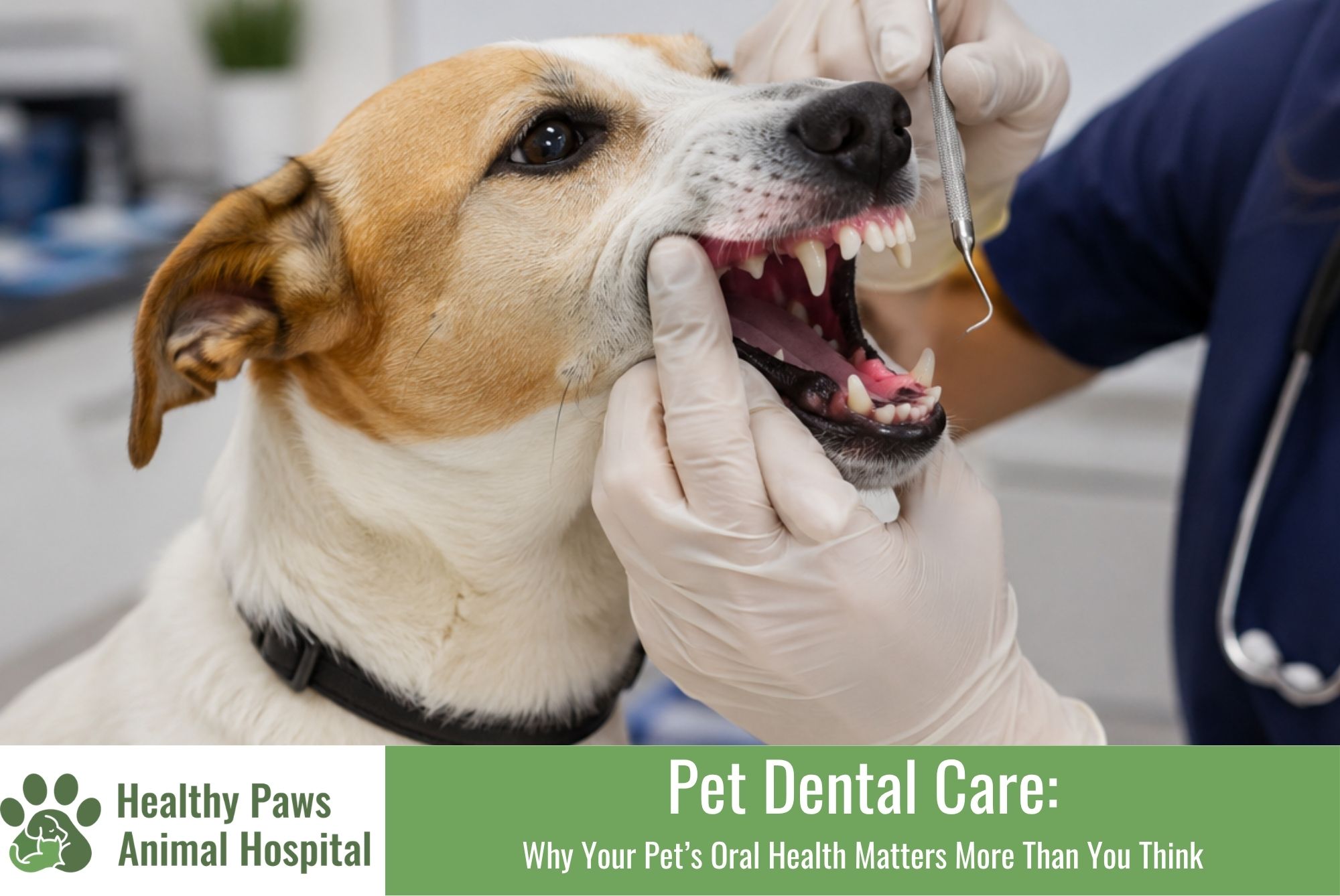
 As pet owners, we do everything we can to keep our furry family members healthy and happy. We ensure they receive proper nutrition, regular exercise, vaccinations, and routine wellness exams. However, one critical aspect of pet health is often overlooked—dental care.
At Healthy Paws Animal Hospital in Glendora, CA, we believe that maintaining your pet’s oral health is one of the most important investments you can make in their overall well-being. Dental disease is among the most common health conditions affecting both dogs and cats, and without proper treatment, it can lead to pain, infection, tooth loss, and even serious health complications affecting vital organs. Healthy Paws Animal Hospital provides comprehensive veterinary dental services, including professional cleanings, digital dental X-rays, and tooth extractions when necessary, helping pets maintain healthy teeth and gums throughout their lives.
Why Pet Dental Health Is So Important
Many pet owners assume that bad breath is normal. In reality, persistent bad breath is often one of the first signs of dental disease.
Dental problems begin when plaque accumulates on the teeth. Over time, plaque hardens into tartar, creating an environment where bacteria thrive. These bacteria can cause inflammation of the gums, known as gingivitis, which can eventually progress into periodontal disease.
Left untreated, periodontal disease can lead to:
- Painful gum infections
- Tooth decay and tooth loss
- Difficulty eating
- Jawbone deterioration
- Chronic inflammation
- Increased risk of heart, kidney, and liver complications
Studies show that a significant percentage of dogs and cats develop some degree of dental disease during their lifetime, making preventive dental care an essential component of responsible pet ownership.
Signs Your Pet May Need Dental Care
Pets often hide discomfort, making dental disease difficult to detect until it becomes advanced. Watch for the following warning signs:
Bad Breath
Persistent foul-smelling breath is one of the earliest indicators of oral disease.
Yellow or Brown Tartar Buildup
Visible deposits along the gumline indicate plaque accumulation that requires professional attention.
Red or Bleeding Gums
Inflamed gums can signal gingivitis or more advanced periodontal disease.
Difficulty Eating
Pets experiencing dental pain may avoid hard food, chew on one side of the mouth, or drop food while eating.
Excessive Drooling
Increased saliva production can indicate oral discomfort or infection.
Pawing at the Mouth
Pets may repeatedly touch or rub their face when experiencing dental pain.
Loose or Missing Teeth
Advanced dental disease can weaken supporting structures and lead to tooth loss.
If you notice any of these symptoms, scheduling a dental evaluation is highly recommended.
The Benefits of Professional Veterinary Dental Care
Professional dental care goes far beyond what can be achieved with home brushing alone.
At Healthy Paws Animal Hospital, veterinary dental procedures include:
Comprehensive Oral Examination
A detailed assessment of your pet’s teeth, gums, tongue, and oral tissues.
Professional Dental Cleaning
Plaque and tartar are carefully removed above and below the gumline under safe anesthesia. This allows for a thorough cleaning while minimizing stress and discomfort.
Digital Dental X-Rays
Many dental issues occur below the gumline where they cannot be seen during a visual examination. Digital dental radiographs help identify:
- Root damage
- Bone loss
- Abscesses
- Fractures
- Hidden infections
Dental X-rays play a critical role in detecting problems before they become severe.
Tooth Extractions
When teeth are severely damaged or infected, extraction may be the best option for eliminating pain and preventing further disease progression.
How Often Should Pets Have Dental Cleanings?
Every pet is different, but most dogs and cats benefit from annual dental evaluations.
Some pets, particularly small dog breeds, senior pets, and animals with a history of dental disease, may require more frequent cleanings and monitoring.
Your veterinarian can recommend a personalized dental care schedule based on your pet’s age, breed, lifestyle, and oral health status.
Home Dental Care Tips for Pet Owners
Professional dental cleanings are essential, but home care can help extend the time between visits.
Brush Your Pet’s Teeth
Daily brushing remains the gold standard for preventing plaque accumulation. Use only pet-safe toothpaste specifically designed for dogs and cats.
Provide Dental Chews
Veterinarian-approved dental treats can help reduce plaque and tartar buildup.
Consider Dental Diets
Some specialized pet foods are formulated to support oral health through mechanical cleaning action during chewing.
Schedule Routine Exams
Regular veterinary checkups allow early detection of dental issues before they become serious problems.
Why Choose Healthy Paws Animal Hospital for Pet Dental Care?
Healthy Paws Animal Hospital proudly serves Glendora and surrounding communities with compassionate, comprehensive veterinary care. Our experienced team utilizes advanced dental technology, including dedicated dental suites and digital dental X-ray equipment, to provide thorough and effective treatment for dogs and cats. We are committed to helping pets maintain healthy smiles while improving their overall quality of life.
Whether your pet needs a routine cleaning, a dental evaluation, or treatment for a more advanced dental condition, our veterinary team is here to help.
Frequently Asked Questions About Pet Dental Care
How often should my pet have a dental exam?
Most pets should receive a dental examination at least once per year. Pets with existing dental issues may require more frequent evaluations.
Is anesthesia necessary for dental cleanings?
Yes. Professional veterinary dental cleanings require anesthesia to ensure a thorough cleaning beneath the gumline while keeping your pet comfortable and safe.
What causes bad breath in pets?
Bad breath is often caused by bacteria associated with plaque, tartar buildup, and periodontal disease.
Are dental X-rays really necessary?
Absolutely. Many serious dental problems occur below the gumline and cannot be detected through visual examination alone. Dental X-rays help identify hidden infections, fractures, and bone loss.
Can dental disease affect my pet’s overall health?
Yes. Untreated dental infections can contribute to inflammation and may negatively affect the heart, kidneys, liver, and other organs.
What age should dental care begin?
Dental care should begin early. Establishing good oral hygiene habits during puppyhood or kittenhood helps reduce the risk of future dental problems.
How can I tell if my pet is experiencing dental pain?
Signs may include bad breath, difficulty eating, drooling, facial swelling, pawing at the mouth, irritability, or reluctance to chew.
Can cats develop dental disease?
Yes. Cats commonly suffer from periodontal disease, gingivitis, tooth resorption, and other oral health conditions.
How long does a professional dental cleaning take?
The duration varies depending on your pet’s needs but typically ranges from one to several hours, including anesthesia, examination, cleaning, and recovery.
What can I do between professional cleanings?
Regular tooth brushing, dental chews, dental diets, and routine veterinary examinations can significantly improve oral health.
Contact Healthy Paws Animal Hospital
Healthy Paws Animal Hospital
441 E Arrow Hwy, Suite 1
Glendora, CA 91740
Phone: (626) 310-0677
Website: https://hpanimalhospital.net/
Make An Appointment:
https://hpanimalhospital.net/appointments/
Meta Title
Pet Dental Care in Glendora, CA | Healthy Paws Animal Hospital
Meta Description
Learn why pet dental care is essential for your dog or cat’s overall health. Discover signs of dental disease, treatment options, preventive care tips, and expert veterinary dental services at Healthy Paws Animal Hospital in Glendora, CA.
Blog Tags
pet dental care, veterinary dentistry, dog dental cleaning, cat dental care, pet oral health, pet teeth cleaning, periodontal disease in pets, pet dental x-rays, dog bad breath treatment, cat dental disease, veterinary dental services, pet wellness, Healthy Paws Animal Hospital, Glendora veterinarian, pet health, dog dental health, cat oral care, preventive pet care, veterinary clinic Glendora CA, animal hospital dental care