


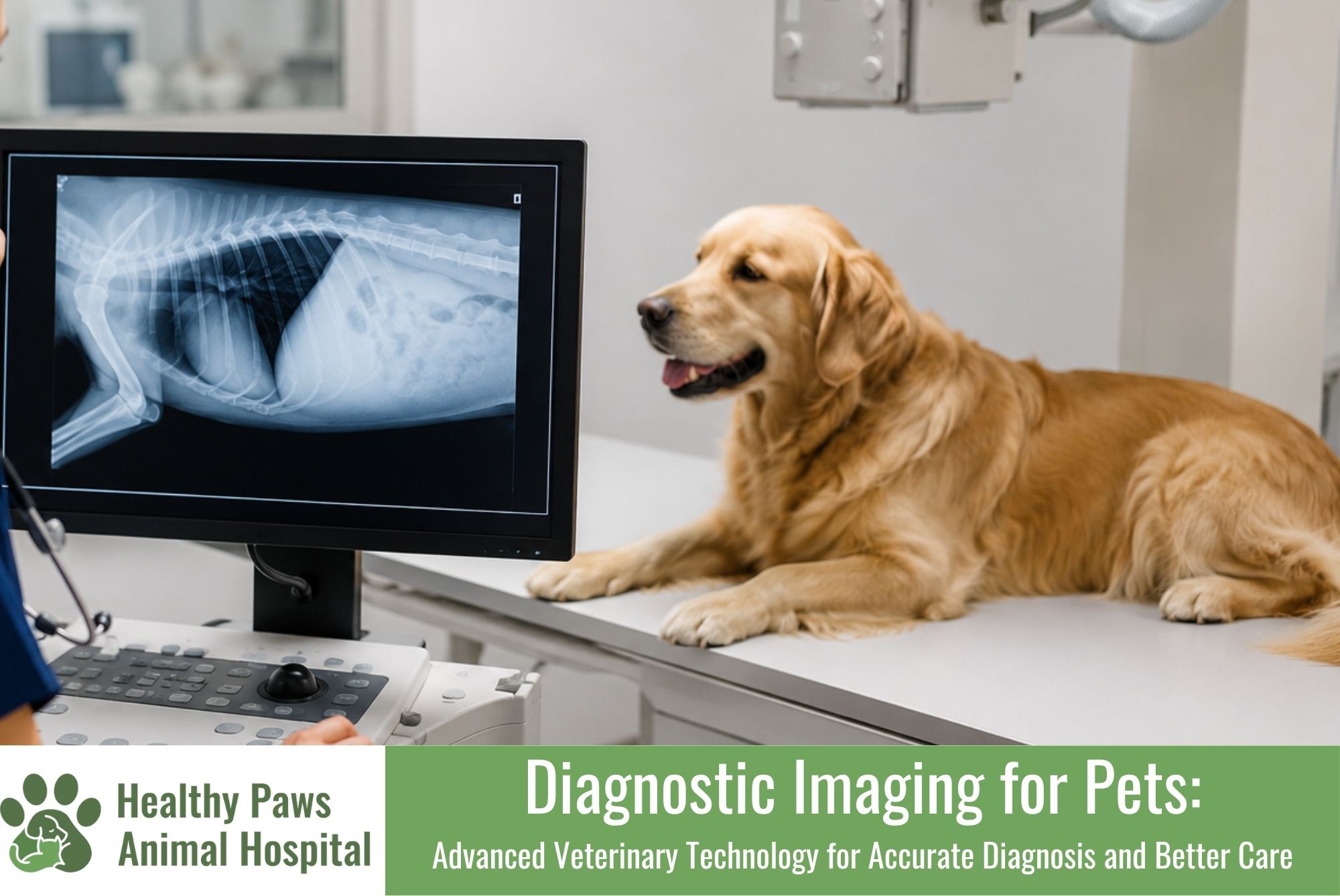
 When your pet is sick, injured, or showing unusual symptoms, getting an accurate diagnosis quickly is one of the most important steps toward effective treatment. Modern veterinary medicine has made remarkable advances in diagnostic technology, allowing veterinarians to see inside the body without invasive procedures. Diagnostic imaging plays a critical role in identifying health concerns, monitoring conditions, and helping veterinarians create personalized treatment plans.
At Healthy Paws Animal Hospital, we utilize advanced diagnostic imaging techniques to help uncover the root cause of your pet’s health issues. Whether your pet is experiencing lameness, respiratory problems, digestive concerns, or unexplained symptoms, our veterinary team is committed to providing thorough evaluations and compassionate care.
What Is Diagnostic Imaging?
Diagnostic imaging refers to a variety of non-invasive technologies that allow veterinarians to examine your pet’s internal structures. These imaging tools provide valuable information about bones, joints, organs, tissues, and other body systems that cannot be assessed through a physical examination alone.
By using diagnostic imaging, veterinarians can identify injuries, diseases, abnormalities, and underlying conditions with greater accuracy and efficiency.
Why Diagnostic Imaging Is Important for Pets
Many illnesses and injuries are hidden beneath the surface and may not show obvious external signs. Diagnostic imaging helps veterinarians:
- Detect fractures and bone injuries
- Evaluate joint health and arthritis
- Identify tumors and masses
- Diagnose heart and lung conditions
- Assess digestive system disorders
- Monitor pregnancy and fetal development
- Evaluate urinary tract conditions
- Investigate neurological concerns
- Guide treatment planning and surgical procedures
- Track disease progression and recovery
Early detection often leads to better outcomes, making diagnostic imaging an essential component of preventive and emergency veterinary care.
Types of Diagnostic Imaging Used in Veterinary Medicine
Digital Radiography (X-Rays)
Digital radiography is one of the most commonly used diagnostic tools in veterinary medicine. X-rays create images of internal structures, particularly bones and dense tissues.
Veterinarians often recommend X-rays for:
- Broken bones
- Joint injuries
- Arthritis evaluation
- Chest examinations
- Heart enlargement detection
- Foreign object ingestion
- Dental assessments
- Spinal evaluations
Digital technology provides high-quality images quickly, allowing veterinarians to make faster and more accurate diagnoses.
Ultrasound Imaging
Ultrasound uses sound waves to create real-time images of soft tissues and internal organs. This technology is especially useful for examining structures that are not clearly visible on traditional X-rays.
Ultrasound can help evaluate:
- Liver health
- Kidney function
- Bladder abnormalities
- Gastrointestinal conditions
- Reproductive health
- Pregnancy monitoring
- Tumors and masses
- Heart function through echocardiography
Because ultrasound is non-invasive and painless, it is often an excellent diagnostic option for pets.
Advanced Imaging Technologies
In some cases, advanced imaging methods such as CT scans (Computed Tomography) or MRI (Magnetic Resonance Imaging) may be recommended for complex conditions.
These technologies provide detailed views of:
- Brain disorders
- Neurological conditions
- Spinal injuries
- Certain cancers
- Complex orthopedic issues
- Internal trauma
Advanced imaging helps veterinarians gain a deeper understanding of challenging medical cases.
Conditions Commonly Diagnosed Through Imaging
Diagnostic imaging can reveal a wide range of medical issues, including:
Orthopedic Problems
Pets frequently suffer from musculoskeletal conditions such as:
- Fractures
- Ligament injuries
- Hip dysplasia
- Arthritis
- Joint abnormalities
Imaging helps determine the severity of the condition and guides treatment recommendations.
Respiratory Disorders
Chest radiographs can identify:
- Pneumonia
- Lung disease
- Fluid accumulation
- Heart enlargement
- Airway abnormalities
Prompt diagnosis supports more effective treatment and recovery.
Digestive System Concerns
Pets experiencing vomiting, diarrhea, loss of appetite, or abdominal pain may benefit from diagnostic imaging to identify:
- Intestinal blockages
- Foreign objects
- Organ enlargement
- Tumors
- Inflammatory conditions
Urinary Tract Issues
Imaging often helps diagnose:
- Bladder stones
- Kidney stones
- Urinary obstructions
- Kidney disease
- Structural abnormalities
Cancer Detection
Early detection is critical when managing cancer. Diagnostic imaging can help locate tumors, determine their size, and monitor treatment progress.
What to Expect During Your Pet’s Imaging Appointment
The diagnostic imaging process is designed to be safe and comfortable for your pet.
During the appointment:
- A veterinarian performs a physical examination.
- Appropriate imaging tests are recommended.
- Images are obtained using specialized equipment.
- Results are reviewed and interpreted by veterinary professionals.
- Findings and treatment recommendations are discussed with you.
Some procedures may require mild sedation to ensure your pet remains still and comfortable while images are being captured.
Benefits of Early Diagnostic Imaging
Early diagnostic testing provides numerous advantages, including:
- Faster diagnosis
- Earlier treatment intervention
- Reduced risk of complications
- Improved treatment outcomes
- Better long-term health management
- Greater peace of mind for pet owners
Many serious conditions can be managed more effectively when detected before symptoms become severe.
The Role of Diagnostic Imaging in Preventive Veterinary Care
Diagnostic imaging is not only used when pets are ill. It can also be an important part of preventive healthcare, especially for senior pets and breeds predisposed to certain conditions.
Routine imaging may help identify:
- Age-related changes
- Early arthritis
- Organ abnormalities
- Cardiac disease
- Hidden tumors
Preventive screening allows veterinarians to detect concerns early and develop proactive treatment plans.
Why Choose Healthy Paws Animal Hospital for Diagnostic Imaging?
At Healthy Paws Animal Hospital, we understand that your pet’s health is a top priority. Our experienced veterinary team is dedicated to providing advanced diagnostic services that support accurate diagnoses and personalized treatment plans.
We focus on:
- Compassionate patient care
- Advanced veterinary technology
- Thorough evaluations
- Clear communication with pet owners
- Comprehensive treatment recommendations
Our goal is to help your pet receive the care they need as quickly and efficiently as possible.
Frequently Asked Questions (Q&A)
What is diagnostic imaging for pets?
Diagnostic imaging refers to technologies such as X-rays and ultrasound that allow veterinarians to view internal structures and diagnose medical conditions without surgery.
Is diagnostic imaging safe for pets?
Yes. Veterinary diagnostic imaging procedures are generally very safe. Modern equipment uses controlled technology designed to minimize risk while providing valuable diagnostic information.
Does my pet need sedation for imaging?
Not always. Many pets can undergo imaging without sedation. However, sedation may be recommended if your pet is anxious, uncomfortable, or unable to remain still during the procedure.
How long does diagnostic imaging take?
The length of the procedure varies depending on the type of imaging being performed. Basic X-rays often take only a few minutes, while more advanced studies may require additional time.
What conditions can X-rays detect?
X-rays can help diagnose fractures, arthritis, heart enlargement, lung disease, foreign object ingestion, spinal issues, and many other conditions.
What is the difference between X-rays and ultrasound?
X-rays are best for evaluating bones and dense tissues, while ultrasound provides detailed images of soft tissues and internal organs.
Can diagnostic imaging detect cancer?
Diagnostic imaging can often identify tumors, masses, and abnormal tissue growth. Additional testing may be required to confirm a cancer diagnosis.
How soon will I receive results?
Many imaging results can be reviewed quickly, allowing veterinarians to discuss findings and treatment recommendations during or shortly after the appointment.
Is diagnostic imaging painful for pets?
No. Most imaging procedures are non-invasive and painless. Some pets may experience mild stress from positioning during the procedure, but every effort is made to keep them comfortable.
Why is early diagnosis important?
Early diagnosis allows veterinarians to begin treatment sooner, which can improve outcomes, reduce complications, and enhance your pet’s quality of life.
Schedule Your Pet’s Diagnostic Imaging Appointment Today
If your pet is experiencing symptoms, recovering from an injury, or due for preventive health screening, diagnostic imaging may provide valuable insights into their health.
The experienced team at Healthy Paws Animal Hospital is here to help with advanced veterinary diagnostics and compassionate care tailored to your pet’s needs.
Contact Healthy Paws Animal Hospital
Healthy Paws Animal Hospital
441 E Arrow Hwy, Suite 1
Glendora, CA 91740
Website: https://hpanimalhospital.net/
Make An Appointment: https://hpanimalhospital.net/appointments/